


08 Jan How to Analyze a Shot: Reading the Target to Understand What to Improve
There’s a moment, right after every shot, when time seems to stop.
The target stands still. You think you hit exactly where you aimed—until you walk up to it and see the hole slightly off to one side. Maybe a bit to the right, or a centimeter low.
Understanding why a pellet landed there instead of where you intended is one of the most important skills in air rifle shooting. Technique and concentration are essential.
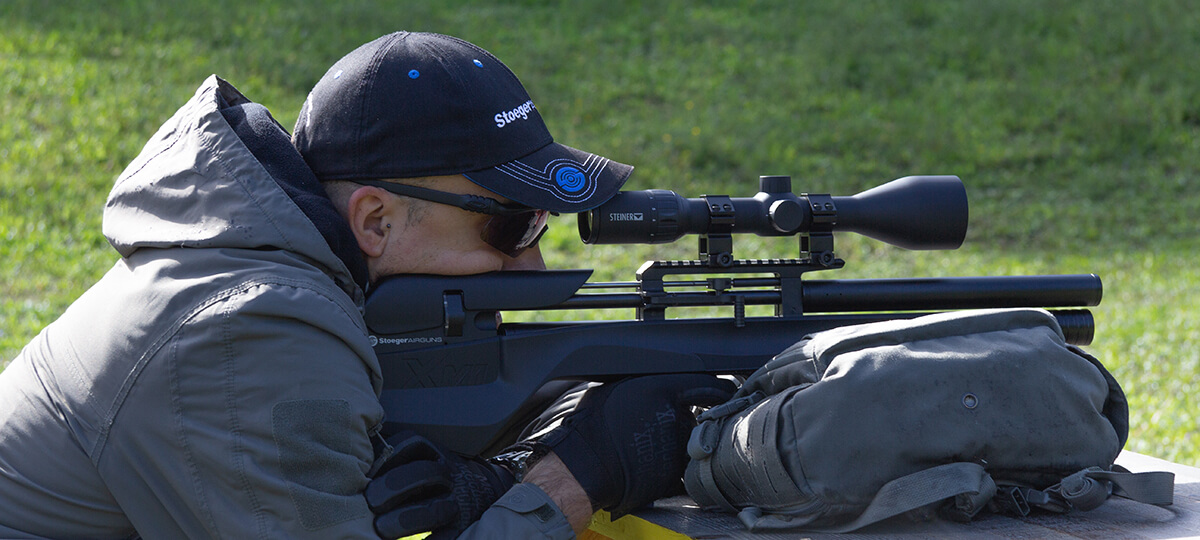
A group of shots consistently high may indicate poor breathing control or a lack of coordination.
A group shifted to the left? You might be gripping the rifle too tightly.
If your group is tight but off-center, your scope probably needs an adjustment.
One useful tip is to write down every detail—distance, lighting conditions, wind, and so on. These notes become your technical journal, a sort of roadmap that tells the story of your progress as a shooter.
When you finish a string of shots, set the rifle down, take a breath, and study the target. Ask yourself:
- Where does most of the group fall relative to the center?
- What shape is the group? Round, vertical, horizontal, scattered?
- Is it consistent? Does each session look similar, or does it change every time?
Here are some common indicators:
- High group: anticipating the shot, lifting your head just before firing.
- Low group: holding your breath too long, breaking the shot late, or pushing forward.
- Left group (for right-handed shooters): overly tight grip or jerking the trigger.
- Wide, irregular group: unstable stance or rest, or inconsistent pellets.
- Tight but off-center group: excellent consistency—just dial in the optic.
Precision comes with experience, but consistency is built through mindful practice.
A shot off-center isn’t a failure—it points directly to what you can improve.
Analyzing each shot is essential for achieving your best performance. The target becomes a silent teacher—one you learn to listen to.
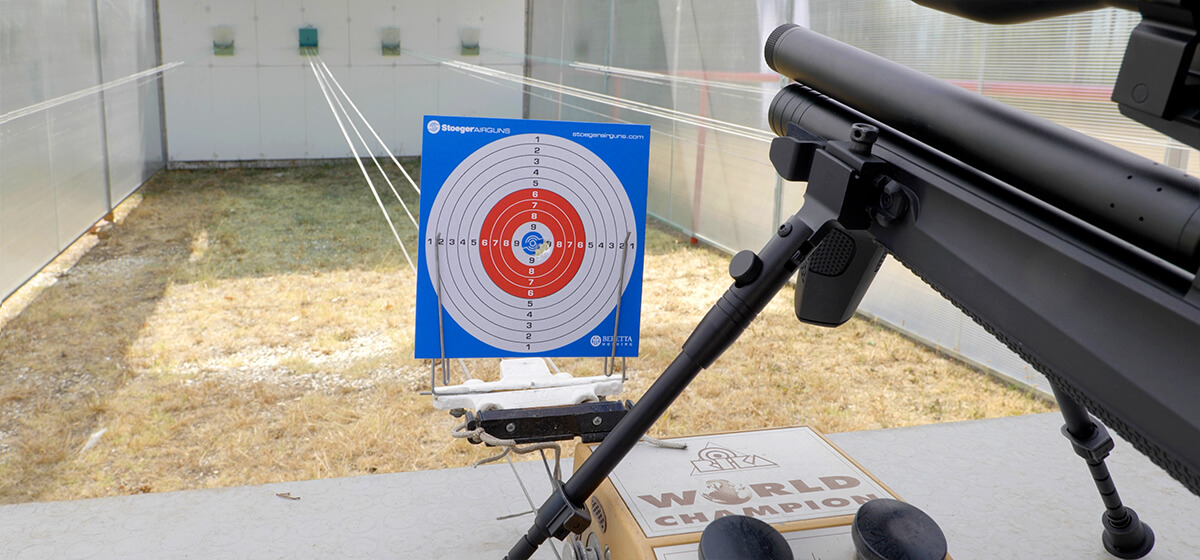
With patience, method, and curiosity, every shooting session becomes a step forward, and every group of holes tells a clearer story of the shooter you’re becoming.